Tolu remembers the exact day her business crossed 1,000 customers, long before customer retention became the word she’d use to describe what went wrong next. The team ordered small chops to celebrate. Someone printed the number and stuck it on the office wall. It felt like proof that the business had arrived.
Six months later, she pulled up the sales dashboard for a routine review and noticed something odd. Revenue was flat, even though the customer count kept climbing. She asked her ops lea-d to check how many of the original 1,000 had bought again. The answer stopped her mid-sentence: fewer than one in five.
The business had not lost customers in any dramatic way. Nobody complained loudly. Nobody wrote an angry review that went viral. People simply stopped coming back, quietly, one order at a time, until the pattern became impossible to ignore.
This is how most customer retention problems actually show up. Not as a crisis, but as a slow leak that leadership only notices once growth stalls despite steady acquisition. Tolu’s story is common among Nigerian SMEs that focus heavily on winning new customers while treating the ones they already have as a settled matter.
Customer retention is the discipline of making sure that does not happen. It is the set of decisions, systems, and habits that turn a first-time buyer into someone who keeps choosing you, month after month, even when a competitor is one WhatsApp message away.
What Is Customer Retention?
Customer retention refers to a business’s ability to keep its existing customers over a given period, instead of losing them to competitors, indifference, or unresolved frustration. It is usually measured as a retention rate: the percentage of customers a business keeps over a specific window, after accounting for the new customers gained.
Retention is often confused with loyalty programs or discount codes, but it runs deeper than that. It reflects whether a customer’s experience with a business, from the first purchase to the tenth support ticket, gives them a reason to stay rather than a reason to quietly leave.
For a Nigerian business, this plays out in very specific ways. A customer who orders food weekly through an app is retained because delivery is consistent and complaints get resolved. A customer who renews a software subscription is retained because the product keeps solving their problem and support replies fast enough to matter. Retention, in practice, is what happens after the sale.
Why Customer Retention Matters More Than Customer Acquisition Alone
Most founders instinctively chase new customers because growth feels visible: more sign-ups, more orders, more names on a spreadsheet. Retention rarely gets the same attention because it is quieter. Yet research from Bain & Company, popularised through Harvard Business Review, found that lifting customer retention by just 5% can increase profits by 25% to 95%, depending on the industry. Separate Harvard Business Review analysis puts the cost of acquiring a new customer at five to twenty-five times higher than the cost of retaining an existing one.
The math is not complicated once it is laid out. A repeat customer already trusts the brand, already understands the product, and typically costs far less to serve than someone a business has to convince from scratch through ads, discounts, and onboarding. A business that acquires aggressively but retains poorly is effectively refilling a leaking bucket, spending more each month just to stay at the same revenue level.
This is especially true for Nigerian SMEs operating on tight margins, where marketing spend often competes directly with operational costs. A retention-first approach turns existing customers into a lower-cost, more predictable growth engine, instead of leaving revenue entirely dependent on the next ad campaign.
None of this means acquisition should stop. It means retention deserves an equal seat at the strategy table, not the leftover attention after every new-customer target has been hit.
Why Customers Stop Buying From Businesses
Customers rarely leave because of one dramatic incident. More often, small frustrations accumulate until a competitor’s offer, or simply the absence of a reason to stay, tips the scale.
Common reasons Nigerian businesses lose customers include:
- Slow responses to WhatsApp messages or support tickets, especially when a customer is trying to resolve a problem before a purchase
- Delivery delays or failed logistics that are never proactively communicated
- Payment issues, from failed transactions to confusing refund processes
- Inconsistent service quality between visits, staff, or locations
- Complaints that get acknowledged but never actually resolved
- A general feeling that the business does not remember or value the relationship
Research from PwC’s “Experience Is Everything” study found that 32% of customers would stop doing business with a brand they genuinely loved after just one bad experience, and that figure rises further once a customer accumulates several disappointing interactions. In competitive markets like Lagos, where customers can compare businesses and read reviews within seconds, that tolerance for bad experiences shrinks even faster. A poor exchange with one customer can also travel quickly through shared WhatsApp groups and social timelines, shaping how dozens of other potential customers see the brand before they have even placed an order.
10 Customer Retention Strategies That Actually Work
- Respond fast, especially on WhatsApp. Many Nigerian customers now expect near-immediate replies. A slow response is often read as disinterest, not busyness.
- Fix the root cause of recurring complaints, not just the individual ticket in front of you.
- Personalise based on purchase history. Reference what a customer has bought or asked about before, rather than treating every interaction as the first.
- Set honest delivery and service expectations, and communicate proactively the moment something changes.
- Make it easy to reach a human when a chatbot or FAQ page cannot resolve the issue.
- Follow up after a purchase, not to upsell immediately, but to confirm the customer is satisfied.
- Reward loyalty with something beyond a generic discount code, such as early access, priority support, or a genuinely useful bonus.
- Train frontline staff on tone, since a single dismissive reply can undo months of goodwill.
- Track satisfaction over time, not just at the point of sale, so declining sentiment is caught early.
- Close the loop on feedback. When a customer takes the time to complain, tell them what changed as a result.
None of these strategies require a large team. They require consistency, and a system that makes it possible to remember what happened with each customer the last time they reached out. This is where structured customer support tools, like the NotchCRM Service Desk, start to matter, since they give a growing team the same context a founder used to hold in their head when the business was smaller.
Ready to see what a retention-first support setup looks like for your business? Book a demo with NotchCRM and walk through it with a member of the team.
The Role of Customer Experience in Retention
Customer experience is the sum of every interaction a customer has with a business, from browsing a product page to writing a complaint at 11pm. Retention is largely a downstream effect of that experience. A business can have a great product and still lose customers if the surrounding experience, communication, delivery, support, feels inconsistent or careless.
PwC’s research found that around 73% of consumers say experience is an important factor in their purchasing decisions, often ranked just behind price and product quality. For Nigerian businesses, this means the conversation before and after the sale, how quickly a question gets answered, how a complaint is handled, how a delivery delay is communicated, carries almost as much weight as the product itself.
Experience is also where alignment between customer support, sales, and marketing becomes visible to the customer, since a mismatch between what marketing promises and what support actually delivers is one of the fastest ways to erode trust.
How Customer Support Influences Customer Loyalty
Customer support is often the only human touchpoint a customer has after the sale, which makes it disproportionately influential on whether they come back. HubSpot’s State of Service research found that a large majority of customers now expect problems to be resolved quickly, with most expecting an immediate or near-immediate response once they reach out.
For a Lagos-based retailer or a fast-growing fintech, this expectation shows up constantly on WhatsApp, where a customer sending a complaint at 9am and getting a reply at 4pm often reads that gap as neglect, even if the eventual resolution is fair. HubSpot’s research also found that a large share of customers are likely to make repeat purchases with companies that consistently deliver excellent service, which reinforces support as a retention lever, not just a cost centre.
Good support does three things well: it responds quickly, it resolves the actual problem rather than a symptom of it, and it leaves the customer feeling like the business took their time seriously. A single support interaction, handled well, can rebuild more loyalty than an entire marketing campaign.
How Technology Can Help Businesses Retain Customers
As a customer base grows past a few hundred people, it becomes impossible to remember every conversation, complaint, and preference manually. This is usually the point where retention starts slipping, not because the team cares less, but because the information a team needs to serve a returning customer well is scattered across WhatsApp chats, spreadsheets, and individual staff memory.
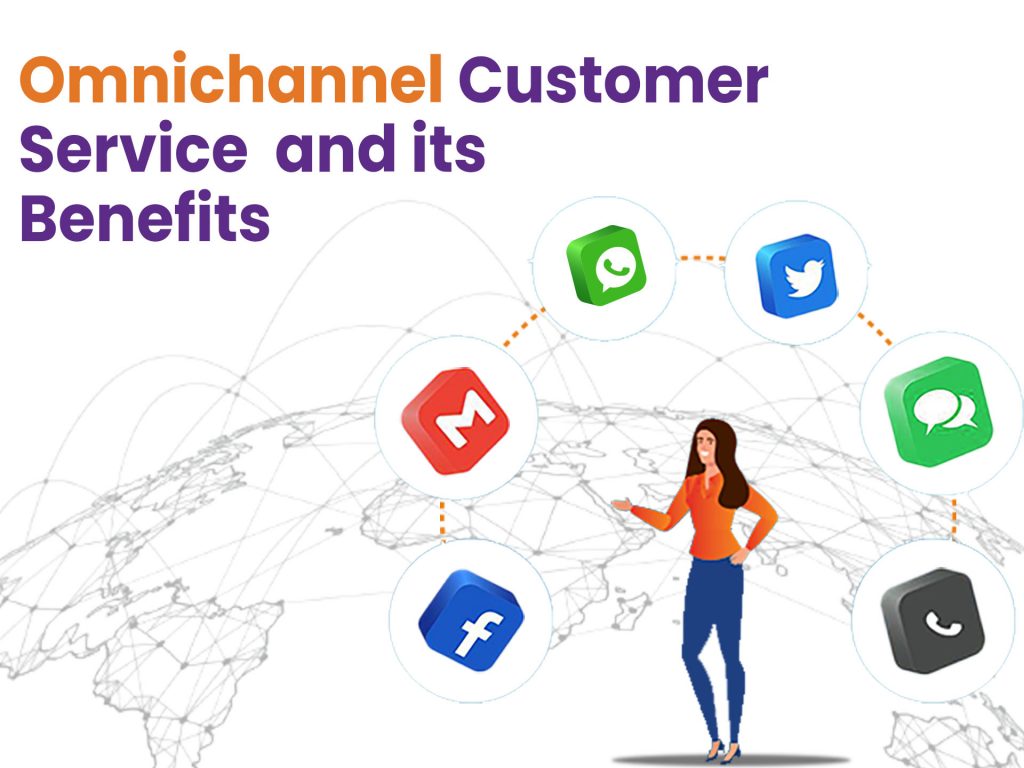
Technology helps close that gap. A structured system can hold a 360° view of each customer, their profile, communication history, past complaints, and satisfaction trends, so that whoever picks up the next conversation has full context instead of starting from zero. Features like omnichannel support bring WhatsApp, email, and social messages into one place, satisfaction analytics flag customers whose sentiment is quietly dropping, and reporting surfaces patterns that would otherwise stay invisible until a customer is already gone.
Tools like the NotchCRM Service Desk are built around this exact problem: giving growing Nigerian businesses the same customer context a founder had when they personally knew every buyer, even after the business has scaled well past that point.
Customer Retention Metrics Every Business Should Track
Retention improves faster once it is measured, not just felt. Worth tracking on a recurring basis:
- Customer retention rate, the percentage of customers kept over a given period
- Customer churn rate, the percentage lost over the same period
- Repeat purchase rate, how often existing customers buy again
- Customer satisfaction score (CSAT), gathered after key interactions
- First response time, since delayed replies are a leading indicator of future churn
- Customer lifetime value (CLV), to understand the long-term impact of retention efforts
None of these metrics need a sophisticated dashboard to start. A simple monthly review of retention rate and complaint resolution time will surface most of the warning signs a business needs.
Common Customer Retention Mistakes Businesses Make
- Treating acquisition and retention as separate goals, when they should share the same strategy
- Measuring satisfaction only at the point of sale, missing how a customer feels weeks later
- Letting complaints sit unresolved while the team focuses on new leads
- Assuming silence means satisfaction, when it often just means the customer left quietly
- Offering discounts as the default loyalty strategy, instead of fixing the underlying experience
- Losing customer history when staff change, because information lived in someone’s head or personal phone rather than a shared system
Most of these mistakes are not about effort. They are about the absence of a system that makes retention visible before it becomes a revenue problem.
Talk to a consultant about auditing where your current customer journey might be leaking retention. See how NotchCRM works.
How Nigerian Businesses Can Build a Retention-First Customer Experience
Building a retention-first culture in Nigeria starts with accepting a few local realities. Customers switch fast, often within a single conversation. WhatsApp is not a side channel, it is frequently the main one, with tens of millions of Nigerians messaging businesses on it daily. Complaints travel through shared networks quickly, and price competition alone rarely wins loyalty in crowded markets like Lagos.
A retention-first business responds to WhatsApp with the same urgency as a phone call, gives frontline staff the authority to resolve small issues without escalation, and treats every complaint as information rather than an inconvenience. It also invests in visibility, knowing which customers have gone quiet, which complaints keep recurring, and which support conversations are taking too long to close.
None of this requires abandoning what already works. It requires connecting the dots between sales, support, and marketing so that a customer’s history follows them through every interaction, instead of resetting every time they reach a new staff member.
Speak with an expert about what a retention-first setup could look like for your team. Book a demo.
Conclusion
Tolu’s business survived its quiet retention problem because the dashboard eventually forced an honest conversation. Many businesses never get that moment of clarity, because nobody is tracking whether customers are actually coming back.
Customer retention is not a customer service department’s job alone. It touches how sales sets expectations, how support resolves problems, and how marketing keeps a promise made months earlier. Treated as a company-wide growth strategy rather than an afterthought, retention becomes one of the most reliable levers a Nigerian business has for sustainable revenue, often more reliable than the next acquisition campaign.
If you are ready to see what a connected, retention-first customer experience looks like in practice, talk to the NotchCRM team and walk through it together.